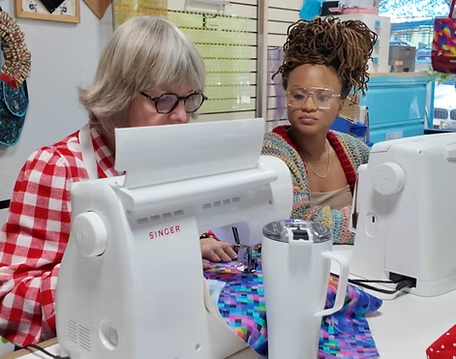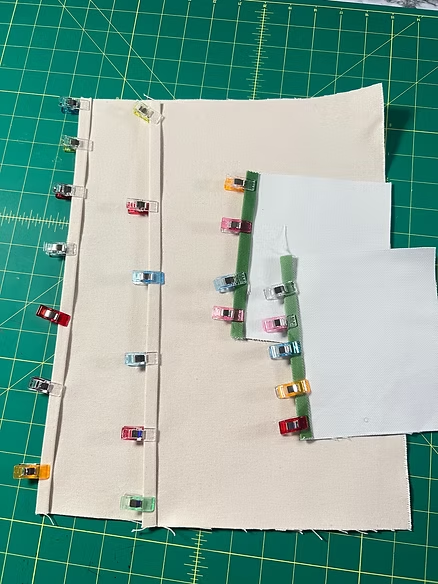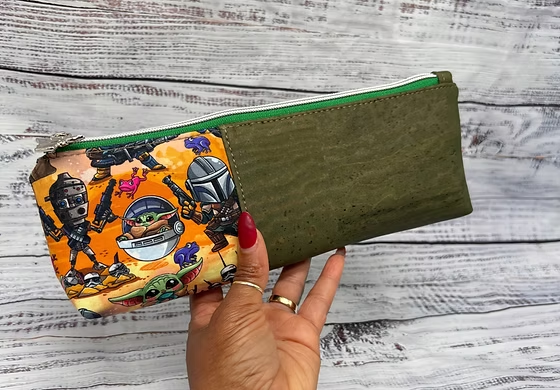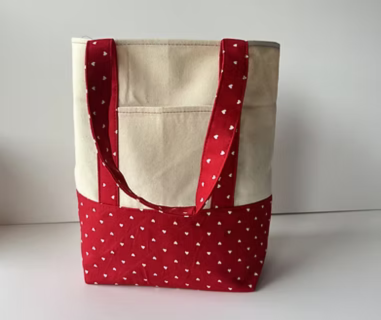
This year, I’ve placed a much stronger focus on bag making. We’re still in the first quarter, and I’ve already made more than sixteen bags, many of them in preparation for the bag-making classes I teach at a local sewing school.
It was a bit of a realization as I was planning out my classes. If I hadn’t already made the bag I planned to teach, I probably should. Not only to have photos and examples of what my students will aspire to create, but also to ensure I can troubleshoot effectively when questions come up during class.
It’s been fun… but wow, I’ve been busy.
What Goes Into Preparing a Sewing Class
Â
Teaching sewing classes means you start thinking about projects very differently than when you’re sewing to sell or simply making something for yourself.
Before a class ever happens, there’s quite a bit of preparation behind the scenes. I usually start by making at least one sample bag for each class project. During that process, I take detailed notes, time each step, and identify any parts of the pattern that might confuse beginners. I’m also thinking about whether the project can realistically be completed within the allotted class period.
Sometimes a bag that looks quite simple can take twice as long as expected, while others come together surprisingly quickly.
Because of this, I’ve found myself not only creating patterns specifically for teaching, but also searching for well-written free patterns that are already available.
How Teaching Changed the Way I Evaluate Patterns
A good class project should not only produce a beautiful bag, but also give students skills they can use in future sewing projects.
Â
Why I Always Make the Sample First
Â
For every class I teach, I make at least one sample bag beforehand.
This improves my ability to teach from experience, but it also helps me catch mistakes or unclear instructions in the pattern. It gives me the opportunity to test alternative construction methods, determine the best interfacing or materials, and create photos that show students what a finished project should look like.
Sometimes the sample bag even becomes a teaching tool during class, helping students visualize what the next step should look like.
At the end of the day, preparing for class isn’t just about teaching someone how to sew a bag. It’s about helping beginner bag makers build confidence with their machine, better understand construction, and walk away with something they’re genuinely proud of.